

For years, Omega-3 has been one of the most recommended nutrients in clinical practice. Yet many people still don't understand that not all Omega-3s are the same.
When most clients say they're "taking an Omega-3", they're often consuming a supplement rich in EPA, ALA, or a combination of fatty acids without really knowing what each one does.
If your goal is supporting brain health, concentration, fertility, cognitive performance, pregnancy outcomes, and healthy ageing, then DHA deserves special attention.
What Are Omega-3 Fatty Acids?
Omega-3s are a family of essential polyunsaturated fatty acids that play structural and functional roles throughout the body.
The three primary forms are:
ALA (Alpha-Linolenic Acid)
Found in flaxseed, chia seeds, walnuts, and hemp.
ALA is considered an essential fatty acid because we cannot produce it ourselves. However, it must be converted into EPA and DHA before it can be used for many biological functions.
Unfortunately, humans convert ALA very inefficiently. Especially if you have the FADS1 or FADS2 genetic mutation!
Research suggests that less than 5–10% of ALA converts to EPA, while conversion to DHA is often below 1%.¹
EPA (Eicosapentaenoic Acid)
EPA is best known for its role in inflammation regulation, cardiovascular health, and mood support.
It is biologically active but is not a major structural component of the brain.
DHA (Docosahexaenoic Acid)
DHA is the form that literally builds the brain.
It is the predominant Omega-3 fatty acid found in the cerebral cortex, retina, and nervous system.²
When we talk about concentration, memory, learning, visual processing, cognitive performance, and infant brain development, we're largely talking about DHA.
DHA: The Brain's Preferred Omega-3
Approximately 30–40% of the polyunsaturated fatty acids in the brain are DHA.³
Unlike EPA, which is used more dynamically throughout the body, DHA becomes incorporated into neuronal cell membranes where it influences:
- Neuronal communication
- Synaptic plasticity
- Neurotransmitter function
- Membrane fluidity
- Signal transmission speed
In simple terms, DHA helps brain cells communicate more efficiently.
This is why DHA has been studied extensively in:
- Focus and concentration
- Learning performance
- Memory
- Cognitive ageing
- Neurodevelopment
- Mood regulation
For clients struggling with brain fog, poor concentration, high cognitive demands, or simply wanting to optimise long-term brain health, DHA intake is often one of the first areas worth assessing.
DHA and Fertility
One area often overlooked is the role of DHA in reproductive health.
Female Fertility
DHA contributes to:
- Healthy egg cell membranes
- Hormone signalling
- Oocyte quality
- Embryonic development
Research suggests that women with higher Omega-3 status may experience improved reproductive outcomes and healthier pregnancies.⁴
Male Fertility
Sperm cells contain extremely high concentrations of DHA within their membranes.
Adequate DHA status has been associated with:
- Improved sperm morphology
- Enhanced motility
- Membrane integrity
- Fertilisation potential⁵
For couples trying to conceive, DHA is often one of the simplest nutritional interventions to consider.
Pregnancy, Babies and Brain Development
During pregnancy, maternal DHA requirements increase substantially.
The developing baby accumulates DHA rapidly throughout the third trimester and early infancy as the brain and nervous system develop.⁶
Higher maternal DHA intake has been associated with:
- Improved infant cognitive development
- Better visual development
- Healthier neurological outcomes
- Reduced risk of maternal DHA depletion⁷
This is one reason many nutritional therapists prioritise DHA supplementation before conception, throughout pregnancy, and during breastfeeding.
Why Absorption Matters
One of the biggest misconceptions in supplementation is that the amount listed on the label is the amount your client actually absorbs.
Delivery format matters.
Ethyl Ester Fish Oils
Many conventional fish oil capsules use ethyl ester forms because they are inexpensive to manufacture.
However, research consistently shows lower bioavailability compared with triglyceride forms.⁸
Triglyceride Omega-3s
Triglyceride forms more closely resemble the way Omega-3s naturally occur in food and are generally absorbed more efficiently.⁹
Phospholipid Omega-3s
Found naturally in krill oil.
Phospholipid-bound Omega-3s may demonstrate enhanced cellular uptake and membrane incorporation, although they are typically more expensive and provide lower total DHA doses.¹⁰
Emulsified Omega-3 Systems
Emerging research suggests emulsified lipid delivery systems may improve digestion and absorption by increasing surface area and reducing the digestive burden required to process fats.¹¹
This can be particularly relevant for clients with compromised digestion, gallbladder issues, reduced bile production, or poor fat absorption.
Algae DHA vs Fish Oil
Many practitioners still assume fish oil is the gold standard source of DHA.
In reality, fish obtain DHA from marine algae.
Algae-derived DHA provides DHA directly without relying on marine food chains and avoids many concerns surrounding ocean contaminants, heavy metals, oxidation, and sustainability.
For vegetarian, vegan, prenatal, and environmentally conscious clients, algae DHA is often an excellent option.
Practical Recommendations for Nutritional Therapists
Consider prioritising DHA-rich Omega-3 supplementation for clients who are:
🧠 Experiencing poor concentration or brain fog
👶 Pregnant, breastfeeding, or planning pregnancy
🎓 Students and professionals under high cognitive demand
👁 Looking to support visual health
❤️ Interested in healthy ageing and cognitive longevity
👨👩👧👦 Supporting children's brain development
💑 Trying to conceive
When assessing supplements, don't just ask:
"How much Omega-3 does it contain?"
Ask:
"How much DHA does it provide?"
Because when it comes to the brain, fertility, focus, and cognitive performance, DHA is often the Omega-3 doing the heavy lifting.
References
- Burdge GC, Calder PC. Conversion of alpha-linolenic acid to longer-chain polyunsaturated fatty acids in human adults. Reproduction Nutrition Development. 2005;45(5):581-597.
- Dyall SC. Long-chain omega-3 fatty acids and the brain. Nutrients. 2015;7(4):2670-2701.
- Lauritzen L, Brambilla P, Mazzocchi A, et al. DHA effects in brain development and function. Nutrients. 2016;8(1):6.
- Chiu YH, et al. Plasma phospholipid omega-3 fatty acids and female fertility. Human Reproduction. 2018;33(8):1565-1573.
- Safarinejad MR. Effect of omega-3 supplementation on semen quality. Journal of Urology. 2011;185(1):184-192.
- Innis SM. Dietary omega-3 fatty acids and the developing brain. Brain Research. 2008;1237:35-43.
- Gould JF, Smithers LG, Makrides M. Maternal DHA and child neurodevelopment. Nutrients. 2013;5(7):2777-2810.
- Dyerberg J, et al. Bioavailability of marine n-3 fatty acid formulations. Prostaglandins Leukot Essent Fatty Acids. 2010;83(3):137-141.
- Neubronner J, et al. Enhanced increase of omega-3 index by re-esterified triglyceride fish oil. Lipids. 2011;46(11):1089-1098.
- Schuchardt JP, Hahn A. Bioavailability of omega-3 fatty acids from krill oil versus fish oil. Marine Drugs. 2013;11(2):605-621.
- Arterburn LM, et al. Bioequivalence of docosahexaenoic acid from different delivery systems. Lipids. 2007;42(11):1011-1024.
Additional References from Presentation at the IPM:
85% of Global Population deficient in Omega 3s
Case Western Reserve University. "Global shortage of essential nutrient poses health concern." ScienceDaily. ScienceDaily, 29 May 2025. <www.sciencedaily.com/releases/2025/04/250430142353.htm>.
Shrinking Brain Hypothesis
Crawford MA. The Shrinking Brain Hypothesis and Human Nutrition Research.
Omega 3 DHA and EPA Benefits
https://ods.od.nih.gov/factsheets/Omega3FattyAcids-HealthProfessional/
Swanson D, Block R, Mousa SA. Omega-3 Fatty Acids EPA and DHA: Health Benefits Throughout Life. Advances in Nutrition. 2012;3(1):1–7.
OmegaQuant. Global Omega-3 Index Project. Available at: https://omegaquant.com
Omega 3 DHA & Brain Development
Guesnet P, Alessandri JM. Docosahexaenoic Acid (DHA) and the Developing Central Nervous System. Journal of Nutrition and Health Aging. 2011;15(10):934–941.
Innis SM. Dietary Omega-3 Fatty Acids and The Developing Brain. Brain Research. 2008;1237:35–43.
Bazinet RP, Layé S. Polyunsaturated fatty acids and their metabolites in brain function and disease. Nature Reviews Neuroscience. 2014;15(12):771–785.
Omega 3 EPA & Heart Health
Calder PC. Omega-3 Fatty Acids and Inflammatory Processes. Nutrients. 2010;2(3):355–374.
Omega 3 & Fertility
Starling P, Charlton K, McMahon AT, Lucas C. Fish intake during pregnancy and foetal neurodevelopment--a systematic review of the evidence. Nutrients 2015;7:2001-14.
Fish Oil % Rancidity
Hands, J. M., Anderson, M. L., Cooperman, T., & Frame, L. A. (2024). A Multi-Year Rancidity Analysis of 72 Marine and Microalgal Oil Omega-3 Supplements. Journal of Dietary Supplements, 21(2), 195–206. https://doi.org/10.1080/19390211.2023.2252064
Conversion Rates
Brenna JT, Salem N Jr, Sinclair AJ, Cunnane SC. Alpha-Linolenic Acid Supplementation and Conversion to n-3 Long-Chain Polyunsaturated Fatty Acids. Prostaglandins Leukot Essent Fatty Acids. 2009;80(2-3):85–91.
‘The Omega Principle’, Paul Greenberg, 2019
Burdge GC, Calder PC. Conversion of Alpha-Linolenic Acid to Longer-Chain Polyunsaturated Fatty Acids in Human Adults. Reproduction Nutrition Development. 2005;45(5):581–597.
Nichols PD et al. Are Krill Oil Supplements Better Than Fish Oil Supplements? Marine Drugs. 2014;12(2):647–664.
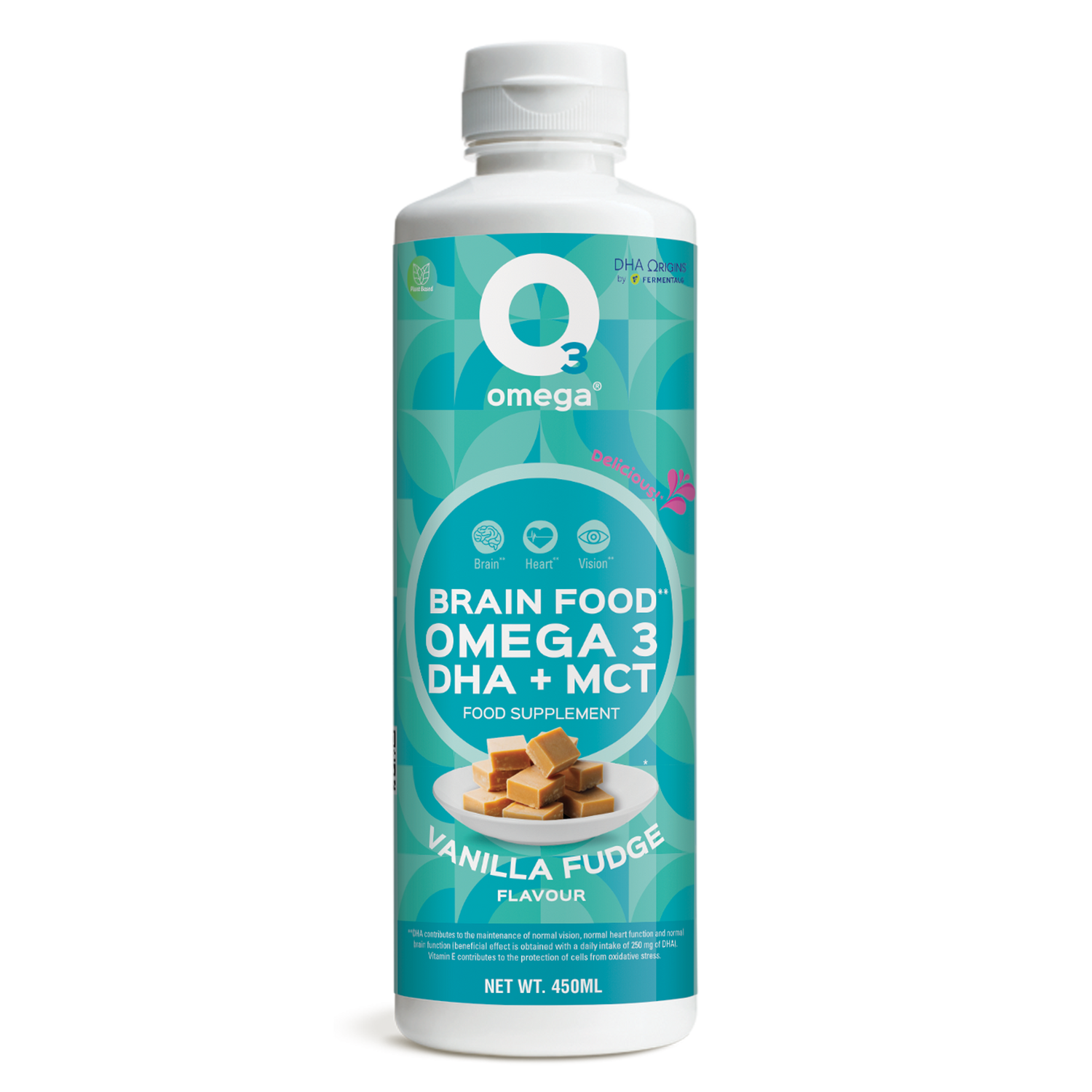
Author note: At O3Omega®, we're particularly interested in making DHA supplementation both effective and enjoyable. Because the best supplement in the world only works if people actually take it consistently.


0 comments