
Why I Think About Healthy Ageing Through Three Lenses: Input, Hormesis and Transcendence
By Sara Fenn, CEO of O3Omega
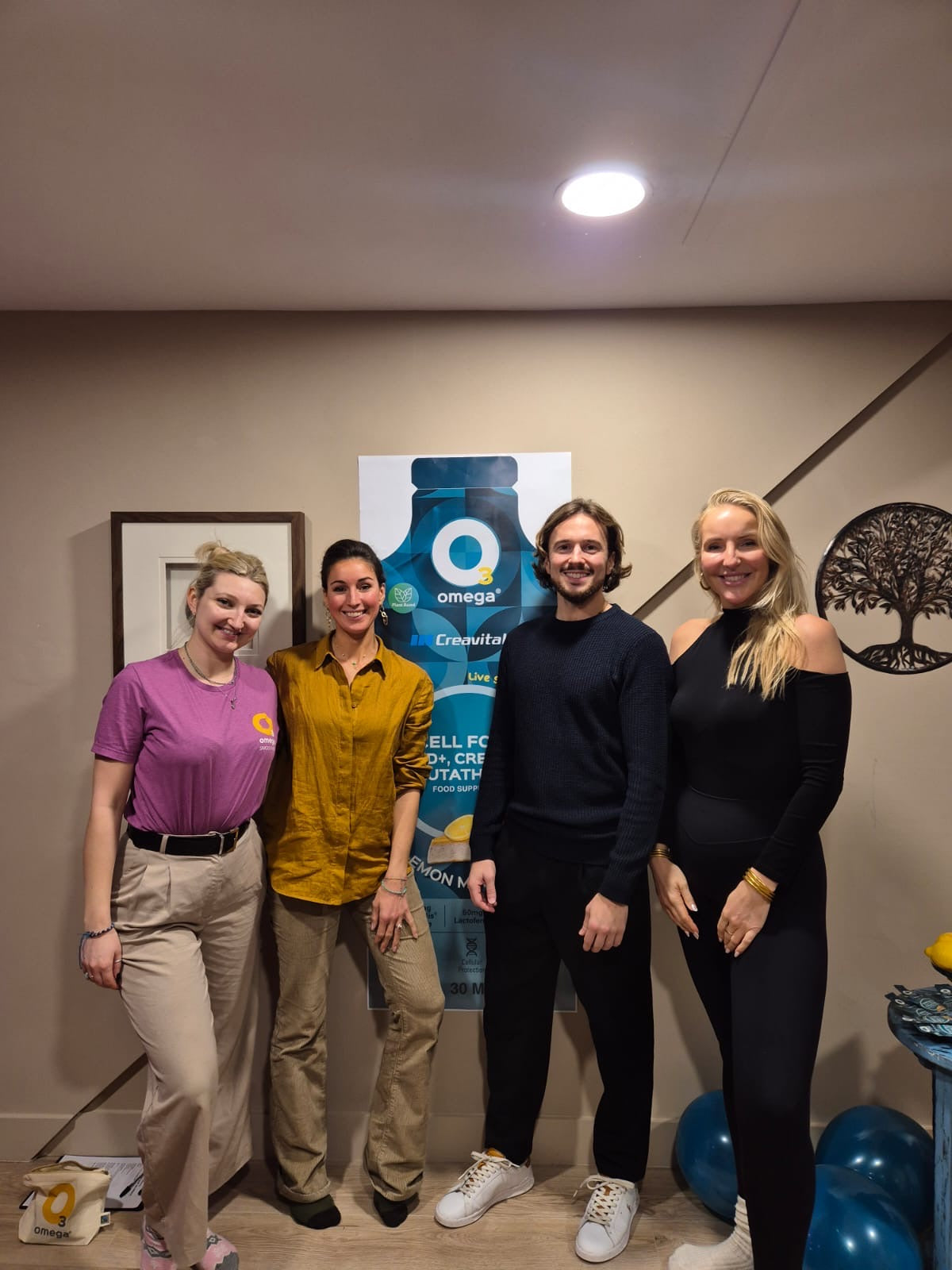
Last month, alongside Serena Organics, we hosted a longevity workshop at Holosophy, a beautiful wellness and biohacking space dedicated to exploring human optimisation. The event marked the launch of our latest O3Omega liposomal longevity blend in Lemon Meringue, but more importantly it was an opportunity to explore a question that has fascinated me for years:
How do we live longer, healthier lives?
As an anthropologist, I’ve always been interested in humans from an ancestral perspective — how we evolved, how we adapted to our environments, and what supports optimal health across the lifespan. At O3Omega, that curiosity continues through our work in nutritional science and cellular health.
The longevity conversation has exploded in recent years. We see it everywhere: documentaries, podcasts, and a growing number of products claiming to slow ageing or extend lifespan. Yet despite the excitement, longevity is often presented as a single intervention — a supplement, a molecule, or a technology.
In my view, that misses the point.
Longevity is not one intervention. It’s a system.
Understanding Longevity Through the Biology of Ageing
Before we can talk about longevity, we need to understand its opposite: ageing.
At a biological level, ageing is largely the result of cellular degeneration. Over time, cells accumulate damage through processes such as oxidative stress, chronic inflammation, and DNA mutation. These mechanisms gradually impair the body’s ability to repair itself.
We see the results of this degeneration across many age-related conditions:
-
Wrinkles develop as collagen breaks down in skin cells
-
Arthritis arises through chronic inflammation in joints
-
Cognitive decline occurs when brain mitochondria struggle to produce energy efficiently
-
Cardiovascular disease develops when oxidative stress damages arteries
-
Cancer emerges when mutated DNA replicates uncontrollably
These mechanisms — oxidation, inflammation and cellular damage — are widely recognised as key biological drivers of ageing.
Longevity research therefore focuses on the opposite processes: protecting cells and supporting regeneration.
This thinking also informed the development of our longevity blend at O3Omega, which combines ingredients such as omega-3 fatty acids, glutathione, NAD⁺ precursors, creatine and lactoferrin — compounds associated with mitochondrial health, antioxidant protection and inflammation reduction.
But supplements are only one piece of the puzzle.
Over the years, I’ve developed a simple framework for thinking about longevity that integrates nutrition, physiology and mindset.
I call it Input, Hormesis and Transcendence.
1. Input: What We Put Into Our Bodies
The first pillar of longevity is Input — what we consume through food, nutrients, environment and information.
Nutrition provides the raw materials our cells need to repair and regenerate. Diets rich in healthy fats, antioxidants and polyphenols have consistently been linked with lower risk of chronic disease and improved longevity (Willett et al., 2019).
Some of the most important nutritional inputs include:
Healthy fats
Omega-3 fatty acids are particularly important for cardiovascular and brain health due to their anti-inflammatory properties (Calder, 2015).
Polyphenols and antioxidants
Deeply pigmented foods such as berries, leafy greens and colourful vegetables contain compounds that protect cells from oxidative damage.
Sulforaphane and detoxification nutrients
Found in cruciferous vegetables such as broccoli, these compounds support the body’s natural detoxification systems.
Beyond diet, there are several other inputs that strongly influence longevity.
Sleep
Sleep plays a crucial role in maintaining brain health. Research has shown that during sleep the brain activates a glymphatic clearance system that removes metabolic waste products associated with neurodegenerative diseases (Xie et al., 2013).
Chronic sleep deprivation has been linked with increased oxidative stress and a higher risk of cognitive decline.
Neuroplasticity and BDNF
Another factor linked to longevity is brain-derived neurotrophic factor (BDNF), a protein that supports neuroplasticity and cognitive resilience. Physical activity and certain nutritional interventions may increase BDNF levels (Cotman & Berchtold, 2002).
Purpose and Social Connection
Anthropology offers a fascinating perspective on longevity through the concept known as the Grandmother Effect. Studies suggest that in human evolution, older individuals contributed to raising younger generations, increasing the survival of their descendants.
Having a sense of purpose and remaining socially engaged may therefore play a role in extending lifespan (Hawkes, 2003).
2. Hormesis: Stress That Strengthens Us
The second pillar is Hormesis.
Hormesis refers to small, controlled stressors that stimulate the body to adapt and become stronger. In other words, certain types of stress — when applied in the right way — can actually support longevity.
Several well-known longevity practices fall into this category.
Intermittent Fasting
Periods without food trigger a cellular recycling process called autophagy, where damaged cellular components are broken down and replaced (Mizushima & Komatsu, 2011).
Resistance Training
Maintaining muscle mass is one of the strongest predictors of healthy ageing. Strength training supports bone density, metabolic health and cognitive function.
Loss of muscle mass significantly increases the risk of frailty and injury later in life. Hip fractures, for example, dramatically increase mortality risk among older adults.
Heat Exposure
Regular sauna use has also been associated with reduced cardiovascular mortality and improved longevity outcomes in large Finnish cohort studies (Laukkanen et al., 2015).
These hormetic stressors essentially train the body to become more resilient.
3. Transcendence: The Psychological Dimension of Longevity
The third pillar is what I call Transcendence.
This refers to practices that help us move beyond everyday stress and cultivate a sense of peace, expansion and meaning.
Examples include:
-
breathwork
-
meditation
-
spiritual practices
-
community connection
There is growing scientific interest in the relationship between psychological wellbeing and biological ageing. Practices that reduce chronic stress may influence inflammation, cortisol regulation and even cellular ageing markers (Black & Slavich, 2016).
In my own observations, people who cultivate purpose, optimism and a sense of spiritual connection often appear to age more slowly.
Longevity Is an Integrated System
If there was one message I wanted participants to take away from the workshop at Holosophy, it was this:
Longevity cannot be approached in isolation.
Supplements may help reduce inflammation and oxidative stress. But their benefits are magnified when combined with:
-
nutritious whole foods
-
restorative sleep
-
strength training
-
hormetic stressors like fasting or sauna
-
meaningful social connection
-
practices that cultivate psychological resilience
Longevity ultimately emerges when we create conditions in which our cells can repair, adapt and regenerate.
And that, in my view, is the real goal of longevity science — not simply to live longer, but to live well for longer.
References
Black, D. S., & Slavich, G. M. (2016). Mindfulness meditation and the immune system. Annals of the New York Academy of Sciences.
Calder, P. C. (2015). Marine omega-3 fatty acids and inflammatory processes. Biochimica et Biophysica Acta.
Cotman, C. W., & Berchtold, N. C. (2002). Exercise and brain health. Trends in Neurosciences.
Hawkes, K. (2003). Grandmothers and the evolution of human longevity. American Journal of Human Biology.
Laukkanen, T., et al. (2015). Sauna bathing and cardiovascular mortality. JAMA Internal Medicine.
Mizushima, N., & Komatsu, M. (2011). Autophagy: renovation of cells and tissues. Cell.
Verdin, E. (2015). NAD⁺ in ageing and metabolism. Science.
Willett, W., et al. (2019). Food in the Anthropocene. The Lancet.
Xie, L., et al. (2013). Sleep drives metabolite clearance from the adult brain. Science.


0 comments